Året var 1964-搜索结果
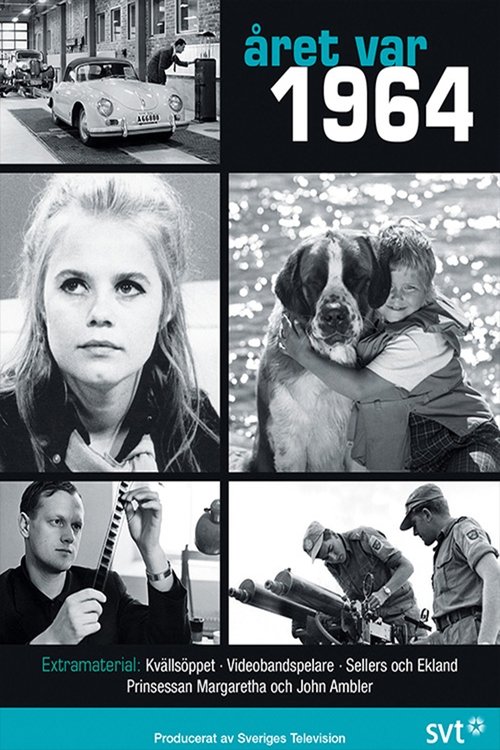
Året var 1964
1964 - the year when Astrid Lindgren's 'Vi på Saltkråkan' is shown on TV, UN Swedes smuggle weapons,

Året var 1966
1966 - when Bob Dylan visits Sweden and Prime Minister Erlander has a difficult time with questions about housing. A special evening at the opera is arranged with Harry Belafonte and Martin Luther King. Esrange is inaugurated and in China the cultural revolution is underway.

Året var 1973
At the end of August 1973, a robber takes hostages at the Kreditbanken at Norrmalmstorg. A week or so later, on September 15, King Gustaf VI Adolf dies in Helsingborg's hospital and Sweden gets a new king: Carl XVI Gustaf. In Chile, the military takes power and the popularly elected president Salvador Allende is overthrown. That and much more in this column about the year 1973.

Året var 1955
1955 - the year when The rip hunter is buried in snow for eight days before his ski pole with a movie ticket is discovered. Ingrid Bergman gets bad reviews as Joan of Arc, and James Dean dies in a 185 km/h car crash. The knappupgänget, with Povel Ramel and Gunwer Bergkvist, go to Nairobi to shoot a film that will never be finished. Sweden votes no to right-hand traffic and the "Motbok" disappears in October. Charlie Norman writes film music and gets a job in the US, while Sigge Eriksson becomes a world figure skating champion in Moscow. Anita Ekberg visits after years in Hollywood and Louis Armstrong gives concerts in Stockholm. Luleå is building the world's first indoor shopping center, and Viggen Viggo is visible on the TV screen.

Året var 1975
This is the year when the Vietnam War ends and terrorists take over the West German embassy in Stockholm. On TV, Staffan Westerberg's "Vilse i Pannkakan" coincides with Ingmar Bergman's "The Magic Flute". Despite the cold war, the USA and the Soviet Union take the opportunity to meet - in space! And Davis Cup tennis is played in Båstad. Sweden meets Chile and the police fear riots. This and much more in "The year was 1975" by Jonas Fohlin and Eva Tillberg.

Året var 1968
1968 - the year of riots, fights and protests. And demonstrations: against the Vietnam War, against teenage fairs, against the Davis Cup and even against Christmas. It is also the year of the invasion of Prague, the very last student exam and the assassination of Martin Luther King.

Året var 1972
In 1972 the green wave sweeps over Sweden, guiding people back to nature away from the cities. Events range from escalated food prices in Skärholmen, the escape of fifteen prisoners from Kumlaanstalten, Sweden's first hijacking, and an Olympic year in Munich, marked by both Swedish success and tragedy with the attack on 11 Israeli athletes. The year also sees emigration to Australia, refugee intake from Idi Amin's Uganda, sports achievements, music releases, and daily life routines throughout various Swedish towns.

Året var 1952
1952 - he year when Gösta Snoddas Nordgren sings Flottarkärlek on the radio and it becomes a hit. Gustaf VI Adolf turns 70. A Swedish DC-3 disappears and a Catalina plane is shot down by Soviet fighter aircraft. A Swedish spy business is being rolled out. Fritjof Enbom has given information to the Soviet Union. It is also an Olympic year - Winter Olympics in Oslo and Summer Olympics in Helsinki.

Året var 1970
This is the year with a music party at Gärdet in Stockholm, and Lee Hazlewood and Nina Lizell wonder who can sail before the wind. The Vietnam War continues and the United States is bombing Cambodia. In Stockholm, police officers write in protest against poor conditions and the rockers take the chance to take over the town. During the "cannon race" on the Gellerås track, a fatal accident occurs. Director Roy Andersson's first feature film "En kärlekshistoria" is a must see.